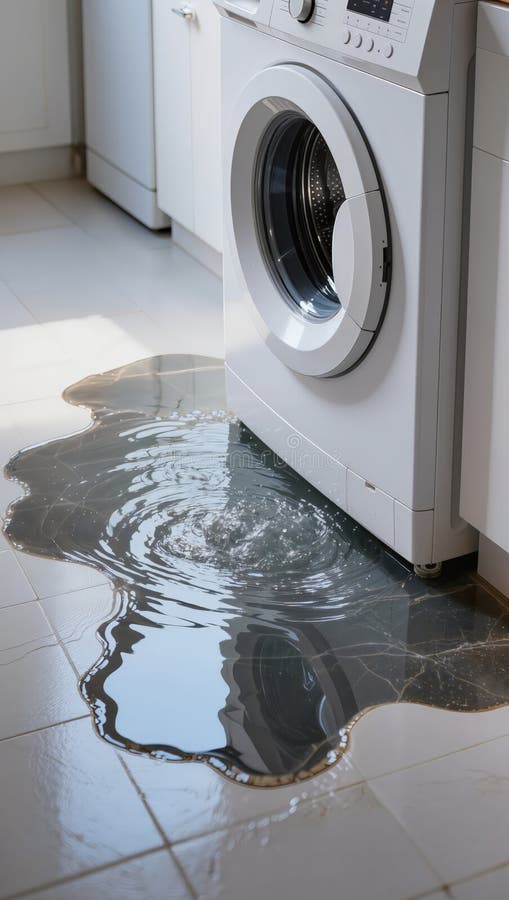
Washing machines are among the top causes of sudden residential water damage in Mobile, Alabama. A single wash cycle uses 20 to 40 gallons of water, and if a pressurized hot or cold supply hose ruptures while you are away from home, hundreds of gallons of water can flood the laundry room, hallway, kitchen, and bedrooms.
Common Causes of Washing Machine Floods
Ruptured Rubber Supply Hoses: Standard black rubber fill hoses are under constant 50–70 PSI water pressure 24/7. Over 3 to 5 years, rubber blisters and splits near the brass crimps.
Clogged or Overflowing Standpipe Drain: Lint, detergent sludge, or a partial main-line blockage causes pumped discharge water to overflow the wall standpipe during the spin cycle.
Loose Drain Hose: The corrugated discharge hose vibrates out of the standpipe and pumps an entire tub of soapy water onto the floor.
Failed Water Inlet Valve or Drum Seal: Front-load door boot seals tear or internal fill solenoids stick open.
Immediate Steps to Take When Your Washer Leaks
1. Disconnect Power Safely and Shut Off Both Water Valves
If water is pooling around the machine, do not touch the metal cabinet while standing in water. Switch off the laundry room circuit breaker at your main panel first, then reach behind the machine and turn both the hot and cold supply valves clockwise until closed.
2. Determine Whether the Water Is Clean (Category 1) or Gray Water (Category 2)
Water from a burst clean supply hose is Category 1 (Clean Water). However, water that overflowed from the washing machine drum or drain standpipe contains detergent, soil, lint, and organic bacteria — making it Category 2 (Gray Water). Category 2 water requires antimicrobial sanitization and typically requires removing wet carpet padding if it spreads into adjacent bedrooms.
3. Pull Out the Washer and Extract Water Underneath
Water trapped beneath the washing machine and dryer wicks directly under baseboards into the drywall and subfloor of neighboring rooms. Pull the appliances out (or have restoration technicians move them) so the entire laundry alcove can be extracted.
4. Schedule Professional Subfloor and Wall-Cavity Drying
Laundry rooms in Mobile homes are frequently floored with tile, vinyl plank, or laminate laid over plywood or concrete, bordered by carpeted hallways. Water seeps beneath the waterproof top layer of vinyl plank or laminate and stays trapped against the subfloor, breeding mold and odor within 48 hours unless commercial dehumidifiers and air movers extract the hidden moisture.
How to Prevent Future Washing Machine Leaks
Replace rubber fill hoses every 5 years with burst-proof braided stainless-steel hoses, install an automatic water shut-off flood pan with a floor leak sensor beneath the washer, and never run the washing machine when leaving the house.
Editorial Standards & Official Restoration References
Every guide published by the RestoreMobileAL.com Editorial & Technical Team is aligned with nationally recognized water damage restoration, indoor air quality, and emergency preparedness standards for the Alabama Gulf Coast:
- ANSI/IICRC S500 & S520 Standards ↗Professional Water Damage Restoration & Mold Remediation Guidelines
- U.S. EPA Mold & Moisture Guide ↗Federal Indoor Air Quality & 24–48 Hour Drying Recommendations
- FEMA National Flood Insurance (NFIP) ↗Official Flood Coverage & Claim Documentation Rules
- Ready.gov Flood Safety Protocol ↗Electrical, Structural & Post-Storm Re-Entry Safety
Related Restoration Services in Mobile, Alabama
Explore our dedicated Mobile, AL service pages related to this guide:
Dealing with Water Damage in Mobile, AL?
Don't wait — 24/7 professional water extraction and structural drying minimizes damage and prevents mold growth.