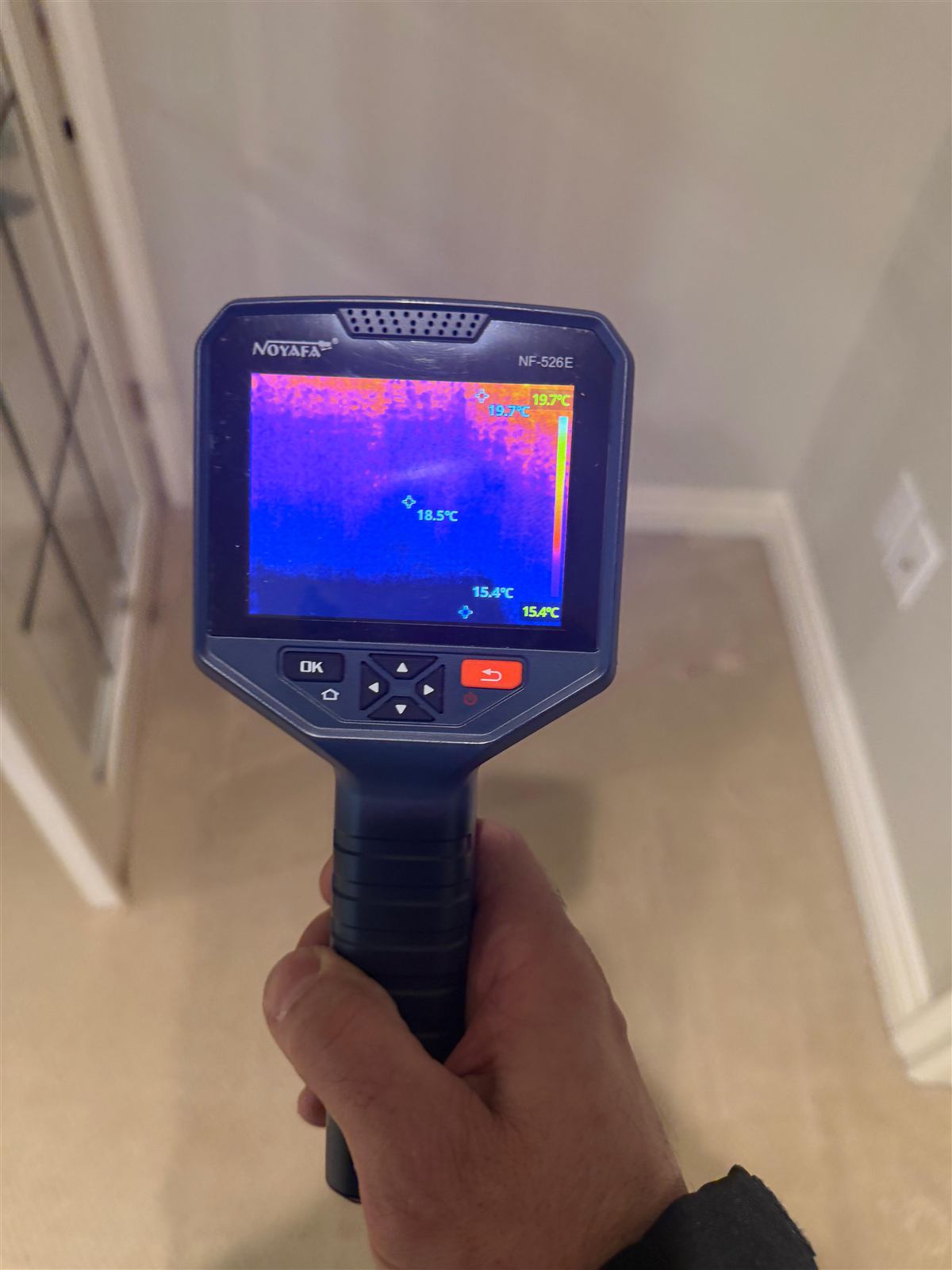
Water damage hidden inside wall cavities, ceiling plenums, and subfloors can silently rot wood framing and breed mold for weeks before standing water ever appears on the floor. In Mobile, Alabama — where older neighborhoods like Midtown and the Oakleigh Garden District feature aging supply plumbing and newer slab homes in West Mobile experience under-slab pinhole leaks — recognizing early warning signs saves thousands in structural repairs.
Why Hidden Moisture Is So Destructive in Mobile's Climate
Inside an enclosed wall cavity, there is zero airflow, no sunlight, and abundant cellulose food sources (drywall paper backing, pine studs, and wood tack strips). When a slow pipe drip, roof flashing leak, or AC condensate line wets the inside of a wall in Mobile's subtropical warmth, mold colonies can establish within 48 hours.
7 Warning Signs of Water Damage Behind Walls
1. Yellow, Brown, or Copper Discoloration Rings
Mineral-tinted stains spreading across drywall seams, around window headers, or near ceiling corners are classic indicators of slow moisture migration. Even if a stain feels dry to the touch today, concentric tide rings mean the cavity is getting wet repeatedly during rainstorms or plumbing use.
2. Peeling, Bubbling, or Blistering Paint and Wallpaper
When moisture saturates gypsum board from behind, water vapor pushes outward against latex paint or wallpaper adhesive, breaking the bond. If paint forms soft blisters or peels near a bathroom, kitchen, or exterior wall, moisture is active inside the stud bay.
3. Soft, Spongy, or Swollen Drywall and Baseboards
Drywall acts like a rigid sponge, wicking water 12 to 24 inches upward above the actual leak source. Gently press along the wall just above the baseboard: if the board gives, crumbles, or pulls away from the mitered corners, the bottom plate and drywall core are saturated.
4. Persistent Musty or Earthy Odors
Active microbial growth releases microbial volatile organic compounds (MVOCs) that smell like damp soil, wet cardboard, or a musty basement. If a hallway, closet, or bedroom smells musty whenever the AC cycles off, hidden moisture is almost certainly present.
5. Buckling, Cupping, or Discolored Flooring
Water leaking inside an interior wall travels down the framing studs and spreads laterally under adjacent hardwood, laminate, or luxury vinyl plank flooring. When the edges of wood planks curl upward (cupping) or dark stains appear at the wall perimeter, subfloor moisture is elevated.
6. Unexplained Spikes in Your Mobile Area Water Service Bill
A pinhole leak in a copper supply pipe inside a wall or beneath a concrete slab can waste hundreds of gallons of water per week without creating a puddle. You can test for a hidden plumbing leak by turning off all faucets and checking whether the low-flow indicator triangle on your water meter is still spinning.
7. Visible Mold Specks Along Baseboard Caulking or HVAC Vents
Tiny black, gray, or greenish-brown clusters forming along the top edge of baseboards or around supply vents often indicate high wall-cavity humidity feeding surface spores.
How Restoration Technicians Detect Hidden Water Non-Invasively
Professional water damage inspectors do not need to tear open your walls just to find a leak. Technicians combine three diagnostic instruments:
Infrared Thermal Imaging Cameras: Detect subtle evaporative cooling patterns behind painted drywall and ceilings, pinpointing the exact outline of wet insulation and framing.
Pinless Electromagnetic Moisture Meters: Scan across tile, hardwood, and drywall without leaving holes to map moisture gradients.
Insulated Pin Probes: Measure exact wood moisture equivalent (%WME) readings at the baseplate and subfloor to verify whether structural drying is required.
Editorial Standards & Official Restoration References
Every guide published by the RestoreMobileAL.com Editorial & Technical Team is aligned with nationally recognized water damage restoration, indoor air quality, and emergency preparedness standards for the Alabama Gulf Coast:
- ANSI/IICRC S500 & S520 Standards ↗Professional Water Damage Restoration & Mold Remediation Guidelines
- U.S. EPA Mold & Moisture Guide ↗Federal Indoor Air Quality & 24–48 Hour Drying Recommendations
- FEMA National Flood Insurance (NFIP) ↗Official Flood Coverage & Claim Documentation Rules
- Ready.gov Flood Safety Protocol ↗Electrical, Structural & Post-Storm Re-Entry Safety
Related Restoration Services in Mobile, Alabama
Explore our dedicated Mobile, AL service pages related to this guide:
Dealing with Water Damage in Mobile, AL?
Don't wait — 24/7 professional water extraction and structural drying minimizes damage and prevents mold growth.