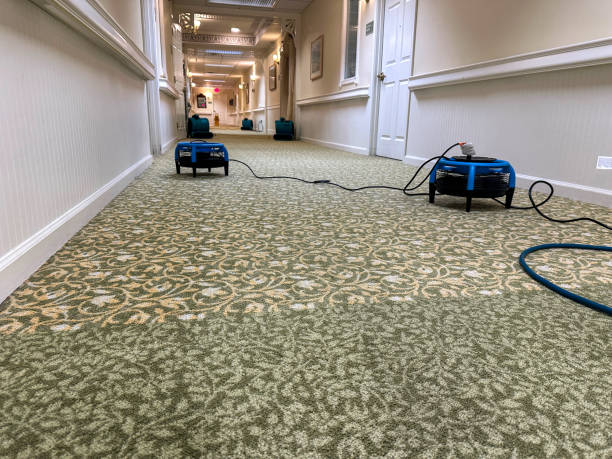
When water intrudes into your home or business, damage does not happen all at once — it escalates along a predictable biological and chemical timeline. In Mobile, Alabama, where warm temperatures and high coastal humidity are present nearly year-round, the window to save wet building materials without demolition is narrow.
The Water Damage Progression Timeline
Within 1 to 4 Hours: Rapid Absorption and Wicking
Standing water immediately saturates carpet fibers, pad, and porous grout lines. Drywall begins wicking water upward via capillary action at a rate of several inches per hour. Furniture legs resting on wet carpet begin bleeding wood dye into the fibers, and paper goods or cardboard boxes dissolve.
Within 4 to 24 Hours: Swelling, Delamination, and Odor Onset
Drywall sheets begin swelling and softening along the bottom plate. Particleboard cabinetry, vanity bases, and laminate flooring cores absorb moisture and permanently swell. Metal surfaces begin to tarnish, and indoor relative humidity in the affected rooms climbs above 70%, creating a clammy, musty indoor environment.
Within 24 to 48 Hours: Mold Germination and Hardwood Cupping
This is the critical inflection point in Mobile's subtropical climate. Dormant mold spores naturally present on drywall and wood framing germinate and begin extending microscopic hyphae into damp materials. Solid hardwood planks absorb moisture from the wet subfloor below, causing the edges of the boards to swell and cup upward. Category 1 clean water that has been sitting stagnant on floors degrades into Category 2 gray water due to bacterial multiplication.
After 48 to 72 Hours: Active Bio-Contamination and Structural Degradation
Visible mold colonies may begin appearing on baseboards, behind wallpaper, and inside wall cavities. Water that started as clean plumbing water is now often treated as Category 3 (unsanitary) if it has passed through subfloors or sat stagnant, requiring the removal and disposal of carpet padding and flood-cut drywall rather than simple in-place drying.
After 1 Week or Longer: Severe Structural Rot and Costly Reconstruction
Wood studs, sill plates, and subfloor joists remain saturated, leading to permanent warping, subfloor delamination, and wood-rot fungi. Restoration shifts from a 3-to-5-day drying project to a major demolition, mold remediation, and reconstruction project — and insurance carriers may question whether the homeowner delayed mitigation.
Why Professional Response in the First 24 Hours Saves Money
Calling for professional water extraction within the first few hours allows technicians to perform restorative drying rather than destructive tear-out. By extracting standing water immediately and bringing indoor relative humidity below 40% with industrial LGR dehumidifiers, hardwood floors, drywall, and cabinetry can frequently be saved in place.
Editorial Standards & Official Restoration References
Every guide published by the RestoreMobileAL.com Editorial & Technical Team is aligned with nationally recognized water damage restoration, indoor air quality, and emergency preparedness standards for the Alabama Gulf Coast:
- ANSI/IICRC S500 & S520 Standards ↗Professional Water Damage Restoration & Mold Remediation Guidelines
- U.S. EPA Mold & Moisture Guide ↗Federal Indoor Air Quality & 24–48 Hour Drying Recommendations
- FEMA National Flood Insurance (NFIP) ↗Official Flood Coverage & Claim Documentation Rules
- Ready.gov Flood Safety Protocol ↗Electrical, Structural & Post-Storm Re-Entry Safety
Related Restoration Services in Mobile, Alabama
Explore our dedicated Mobile, AL service pages related to this guide:
Dealing with Water Damage in Mobile, AL?
Don't wait — 24/7 professional water extraction and structural drying minimizes damage and prevents mold growth.