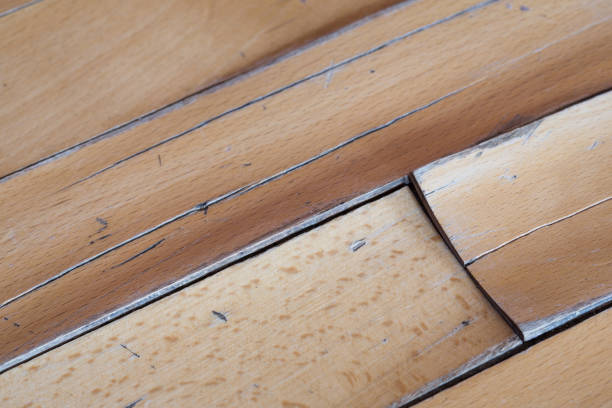
When water floods your living room or stains your ceiling in Mobile, Alabama, one of your very first questions is almost always: 'Will my homeowners insurance cover this?' Because Alabama properties face everything from burst plumbing pipes and overflowing appliances to Gulf Coast hurricanes and flash flooding, understanding how insurance carriers classify water damage can save you thousands of dollars during a claim.
The Golden Rule of Alabama Homeowners Insurance: 'Sudden and Accidental'
Standard Alabama homeowners insurance policies (typically ISO Form HO-3 or HO-5) cover internal water damage when the source is sudden and accidental. In insurance terminology, 'sudden and accidental' means an unexpected mechanical, plumbing, or storm-induced failure that you could not reasonably foresee as part of routine wear and tear.
Water Losses Typically Covered by Standard Alabama HO-3 Policies
1. Burst or Frozen Plumbing Pipes: If a pressurized copper, PEX, or CPVC supply pipe suddenly bursts inside a wall, ceiling, attic, or crawl space, your policy covers emergency water extraction, structural drying, and the repair of damaged drywall, flooring, and baseboards (though the $20 piece of broken pipe itself is usually excluded as a plumbing repair).
2. Water Heater Ruptures: When a 40- to 80-gallon water heater tank corrodes and ruptures or its T&P valve fails, the resulting water mitigation and interior repairs are covered.
3. Appliance Overflows and Supply Line Failures: Sudden leaks from washing machine supply hoses, dishwashers, refrigerator ice-maker lines, and HVAC air-handler condensate overflows are generally covered.
4. Storm-Created Roof or Window Openings: If wind, hail, or a falling tree limb damages your roof shingles or breaks a window during a Mobile thunderstorm or hurricane, allowing rain to pour inside, the interior water damage is covered under your wind/storm coverage.
What Standard Homeowners Insurance Excludes (And Which Riders Cover Them)
Insurance adjusters look closely at three common exclusions on Alabama water claims:
1. External Rising Floodwater and Storm Surge
No standard homeowners policy covers water that touches the ground outside before entering your home — including Mobile Bay storm surge, overflowing creeks (Three Mile Creek, Dog River), or street flash flooding during a 6-inch Gulf Coast cloudburst. External flooding requires a separate policy through FEMA's National Flood Insurance Program (NFIP) or a private flood insurer.
2. Sanitary Sewer and Drain Backups
If heavy rain or oak tree roots cause a municipal sanitary sewer main or house lateral to back raw sewage up through your ground-floor tubs and toilets, a base HO-3 policy excludes it unless you have added a Water/Sewer Backup and Sump Pump Overflow Endorsement (typically a $50–$150/year rider providing $5,000 to $25,000+ in coverage).
3. Long-Term Neglect or Unrepaired Seepage
Policies exclude damage caused by 'constant or repeated seepage or leakage' over a period of weeks, months, or years where the homeowner knew about the leak and failed to repair it. However, if a leak was hidden inside an enclosed wall or ceiling cavity unknown to you, many Alabama policies still provide coverage once the hidden leak is discovered.
Your Policy's 'Duties After Loss': Why Immediate Mitigation Is Mandatory
Every Alabama property insurance policy contains a 'Duties After Loss' clause requiring the homeowner to take reasonable emergency steps to protect the property from further damage. If a pipe bursts on Monday and you wait five days without extracting the water — allowing black mold to ruin the walls and hardwood floors — the insurer can deny the secondary mold and rot damage as preventable neglect.
How Professional Mitigation Protects Your Claim:
1. Time-Stamped Photo Documentation: Technicians photograph the failed plumbing fitting, standing water depth, and initial moisture meter readings before tear-out begins.
2. FLIR Thermal Imaging Proof: Infrared photos prove the exact perimeter of hidden water behind drywall and under flooring so adjusters don't under-scope your repairs.
3. Daily Psychrometric Drying Logs: Following ANSI/IICRC S500 standards, technicians log daily room temperature, relative humidity, grains per pound (GPP), and wood moisture equivalent (%WME) until framing returns to pre-loss dry standards.
Editorial Standards & Official Restoration References
Every guide published by the RestoreMobileAL.com Editorial & Technical Team is aligned with nationally recognized water damage restoration, indoor air quality, and emergency preparedness standards for the Alabama Gulf Coast:
- ANSI/IICRC S500 & S520 Standards ↗Professional Water Damage Restoration & Mold Remediation Guidelines
- U.S. EPA Mold & Moisture Guide ↗Federal Indoor Air Quality & 24–48 Hour Drying Recommendations
- FEMA National Flood Insurance (NFIP) ↗Official Flood Coverage & Claim Documentation Rules
- Ready.gov Flood Safety Protocol ↗Electrical, Structural & Post-Storm Re-Entry Safety
Related Restoration Services in Mobile, Alabama
Explore our dedicated Mobile, AL service pages related to this guide:
Dealing with Water Damage in Mobile, AL?
Don't wait — 24/7 professional water extraction and structural drying minimizes damage and prevents mold growth.